

Research Spotlight - Dr Yosuke Buchmeier
Media, Democracy, and Governing for the Long Term

Yosuke Buchmeier is a Departmental Lecturer in Japanese Studies at the Nissan Institute for Japanese Studies and Oxford School of Global and Area Studies (OSGA) and an Associate Member of St Antony’s College. His research explores a central question of contemporary politics: how democracies can remain resilient, legitimate, and future-oriented in times of rapid structural and technological change.
Yosuke’s work sits at the intersection of political communication, democratic governance, and public policy. Trained as a Japan specialist, he examines how institutions shape public discourse — and how public discourse, in turn, shapes democratic governance. Before entering academia, he worked in international business, an experience that continues to inform his sensitivity to organisational incentives, strategic communication, and the practical constraints under which institutions operate.
Public Discourse in a Changing Media Environment
Yosuke’s doctoral research focused on Japan’s public broadcaster NHK, one of the largest public service media organisations in the world. Public service media occupy a unique and increasingly fragile position: expected to provide independent, high-quality journalism while facing political pressure, digital disruption, audience fragmentation, and competition from global tech platforms.
Rather than approaching these challenges solely from a regulatory or normative perspective, Yosuke examines how public service media adapt in practice. How do editorial priorities shift over time? How do storytelling styles change? Which political and social actors gain or lose visibility? And how can public broadcasters remain relevant in a media landscape increasingly shaped by social media algorithms and on-demand consumption?
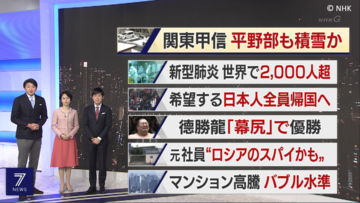
In his book project, The Politics of Public Media News: NHK and Democracy in Japan, Yosuke analyses long-term changes in Japan’s flagship evening news programme. By combining systematic content analysis with institutional and political context, he demonstrates how subtle transformations in topic selection and framing reflect broader shifts in Japan’s political and media environment.
His work advances debates in political communication by further developing the concept of agenda-cutting — the idea that power in media systems does not only lie in what is covered, but also in what is systematically downplayed or excluded. By conceptualising and empirically operationalising agenda-cutting, he contributes a tool for analysing how editorial restraint, strategic silence, or selective emphasis can shape democratic discourse.
In collaborative research with Michel Hohendanner, Chiara Ullstein, and Jens Grossklags of the Technical University of Munich (TU Munich), Yosuke has also explored how cultural narratives shape public imaginaries of emerging technologies. In a study presented at the ACM Conference on Information Technology for Social Good, the team analysed speculative AI design workshops in Japan and Germany. Their findings show how visual and narrative artefacts influence how participants reflect on automation, human agency, and technological futures, highlighting the democratic importance of inclusive public debates on AI governance.
Yosuke has presented his research in international academic and policy forums. He has been invited to participate as a speaker/panellist at the Deutsche Welle Global Media Forum, at the European University Institute (EUI) in Florence, and at the University of Pennsylvania’s Annenberg School for Communication, where discussions focused on media resilience, public trust, and the evolving democratic role of public broadcasters.
For policymakers, these debates are highly relevant. Public service media remain central to democratic infrastructures — yet their legitimacy depends on their ability to adapt without compromising independence. Understanding the institutional incentives and communicative strategies that underpin this adaptation is crucial for designing sustainable media governance frameworks.
Ageing Democracies and Intergenerational Politics
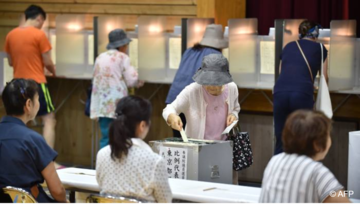
In recent years, Yosuke’s research has expanded from media systems to a broader structural challenge: how democracies can govern for the long term in ageing societies. Thereby, Yosuke has examined how demographic change reshapes the foundations of democratic politics itself. In an article published in Perspectives on Politics, co-authored with Gabriele Vogt (LMU Munich), he analyses how ageing electorates affect participation, representation, and policy outcomes — using Japan as a critical case.
The study shows that ageing democracies face structural imbalances. Younger citizens are not only smaller cohorts; they also participate at significantly lower rates. In Japan, turnout among voters in their twenties is markedly lower than among older age groups, amplifying the electoral weight of elderly voters. At the same time, parliaments are increasingly dominated by older representatives, limiting generational pluralism within legislative institutions.
These participation and representation gaps have tangible policy consequences. Comparative evidence indicates that public spending in advanced ageing democracies tends to favour older cohorts, particularly in pension and healthcare budgets, while investment in younger generations often lags behind.
A central concern in this research is youth political participation. Beyond turnout statistics, Yosuke examines how institutional recruitment patterns, party dynamics, and perceptions of political marginalisation affect younger citizens’ engagement. In ageing societies, declining youth participation can further weaken generational balance, raising normative questions about democratic legitimacy and intergenerational fairness.
For policymakers, the implications are significant. Demographic ageing is not simply a social trend; it alters democratic incentives and redistributive politics. Addressing long-term challenges — from fiscal sustainability to climate policy — requires political systems capable of incorporating younger voices and future-oriented interests. Ensuring such generational pluralism may demand institutional reflection and reform.
Future Design and Institutional Innovation

One particularly innovative response to the challenge of long-term governance has emerged from Japan in the form of “Future Design.” This participatory approach invites citizens to deliberate as representatives of future generations, encouraging them to adopt a long-term perspective in policy discussions.
Yosuke studies these experiments not only as democratic innovations but as potential building blocks for institutional reform. Workshops alone cannot transform fiscal policy. Yet they reveal how structured perspective shifts can change preferences and priorities. Groups deliberating as “future citizens” often advocate more sustainable fiscal and environmental policies than those representing present-day interests.
In recent presentations, including at the European University Institute in Florence and the Future Design Annual Meeting at the Canon Institute for Global Studies (CIGS), Yosuke has explored how such Japanese innovations resonate with emerging European initiatives aimed at embedding long-term thinking into legislative and administrative structures. Comparative dialogue suggests that ageing democracies across regions are grappling with similar dilemmas — and may benefit from shared institutional learning.
The policy relevance is clear: if democracies are to reconcile responsiveness with responsibility, they must experiment with mechanisms that give institutional weight to long-term considerations.
Bridging Japan and Global Debates
A consistent theme in Yosuke’s work is the effort to situate Japan within global theoretical debates. Rather than treating Japan as an exceptional or isolated case, he approaches it as a forerunner democracy — one that encounters structural pressures earlier and often more intensely than others.
By integrating research on media transformation, fiscal sustainability, and intergenerational politics, he contributes to a broader understanding of how democratic systems adapt under strain. His interdisciplinary approach — combining political economy, media studies, and policy analysis — reflects the Nissan Institute’s and OSGA’s commitment to connecting area expertise with global challenges.
At a time when democracies worldwide confront declining trust, societal fragmentation, and mounting long-term risks, Yosuke’s research asks a fundamental question: how can democratic institutions remain both responsive in the present and responsible toward the future?
Through comparative analysis and engagement with policymakers, scholars, and media practitioners, his work aims to contribute not only to academic debate but also to practical conversations about the future of democratic governance.

